ProPharma’s team of dedicated experts is at the forefront of both existing and emerging industry trends. ProPharma’s team inspires tomorrow by leveraging rich data insights across our service lines and functional areas to develop innovative solutions that answer the most complex needs of both existing and prospective clients.
Why Medical Information Is Critical to Adverse Event Reporting
Adverse event (AE) reporting is one of the most critical responsibilities across the pharmaceutical industry. At its core, pharmacovigilance (PV) exists to protect patient safety and maintain regulatory compliance. Yet the success of any PV program depends heavily on accurate, timely AE...
FDA recently updated its informed consent guidance in the form of an Information Sheet. The new document reflects the Agency’s current thinking on the informed consent process utilized in...
Medical device manufacturers may need to re-think their approach to demonstrating substantial equivalence (SE) in the 510(k) notification process, due to the FDA’s recent finalization of the guidance...
From time to time in this industry, you will hear someone bemoaning the fact that they have to do a cleaning validation. If this happens to be you, have no fear and remember the following five points...
The Difference Between Quality and Compliance, Part II
In our previous blog, "The Difference between Quality and Compliance", I mentioned that there are recent initiatives underfoot that FDA hopes will create FDA-industry partnerships, increase...
Outsourcing Facilities and GMP: The Validation Challenge
Compounding is a practice in which a licensed pharmacist, a licensed physician, or, in the case of an outsourcing facility, a person under the supervision of a licensed pharmacist, combines, mixes,...
In case you haven’t noticed, FDA is tired of being the “bad guy”. While they do not back-off of their responsibility to enforce the applicable Code of Federal Regulations for a millisecond, their...
So far in our series on GAMP 5 we’ve provided a high level overview of the five major GAMP concepts, and a more in depth discussion of Concept 1, Process Knowledge and Understanding. In this...
Today, more pharmaceutical companies are turning to outsourcing their products as a strategic part of their business model. There are a number of drivers for this shift to soliciting the services of...
When it comes to the Healthcare industry (e.g. pharmaceuticals, medical devices, dietary supplements, etc.) who owns a company's Quality Assurance practices? Without a doubt the Quality organization...
Challenges When Qualifying a GMP Analytical Laboratory
Expanding an existing lab or establishing a new lab is an exciting time; new equipment, new facility, a fresh start. The key to having a successful laboratory qualification project is communication...
The Cost of Inadequately Scheduling Cleaning Validation
Ever wonder why some—most—projects don’t go as planned? Let me take a chance at explaining what I have observed in the last few decades. Firstly, let us assume that you have contracted a well-known...
As a biopharmaceutical company matures and new products are added to its portfolio, expansion of its facilities, systems and Quality Control is a natural outcome. The growth in the Quality Control...
In my previous blog I re-visited key GAMP® 5 concepts as they relate to establishing a compliant system validation methodology. My next few blogs will focus on each of these concepts in more detail....
Monoclonal Antibody Sameness - Effects on Orphan Drug Development
We note with interest FDA’s recently released Guidance for Industry: Interpreting Sameness of Monoclonal Antibody Products Under the Orphan Drug Regulations (April 2014). The guidance summarizes the...
Risk Assessments Mitigate Risk for Bigger and Smaller Companies Alike
Earlier this year, the Officer of Inspector General (OIG) put smaller life sciences companies on notice that they should put in place a risk assessment process as part of their corporate compliance...
Compiling and submitting a New Drug Application (NDA) submission is a complicated and intensive activity. Once you have submitted your application to FDA, you may be curious about what can you expect...
Safety Data Exchange Agreements (SDEAs) and Pharmacovigilance Agreements (PVAs) – An Overview
A Safety Data Exchange Agreement (SDEA) or Pharmacovigilance Agreement (PVA) is a legal written contract which ensures that all safety data, PV tasks and responsibilities are detailed between two or...
The End of the FDA's Rare Pediatric Disease Priority Review Voucher Program
What’s Next for Rare Disease Innovation? For children suffering from rare and often life-threatening diseases, access to new and effective treatments can mean the difference between life and death....
An Overview of the PSMF: Pharmacovigilance System Master File
What is a PSMF? The EU Pharmacovigilance System Master File (PSMF) is a legally required document created and maintained by a Marketing Authorisation Holder (MAH). Essentially, the document is a...
In order to incentivize the development of therapies (drugs biologics) to fill unmet medical needs for treatment of serious conditions, the FDA has developed various programs to expedite drug...
The Importance of the eCTD Structure for FDA Approval
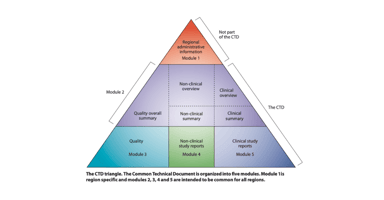
The Importance of the eCTD To harmonize the process of regulatory reviews for global drug development, a unified structure was developed and implemented for electronic Common Technical Document...